

 See My Latest Article on HelloNation
Sustainable building materials are products selected for their environmental impact, durability, energy performance, maintenance needs, and suitability for the local climate. For households in Snowshoe, WV, the most useful choices are not always the newest or most heavily marketed products. Materials that handle heavy snow, freeze-thaw cycles, moisture, and long heating seasons can often provide the greatest long-term benefit.
What makes a building material sustainable?
A sustainable material creates fewer environmental impacts over its full life while performing reliably in the building. That life cycle includes extracting raw materials, manufacturing, transporting, installing, maintaining, replacing, and disposing of the product.
Useful questions include:
- Does the material require a large amount of energy or water to manufacture?
- Can it last for decades in local weather conditions?
- Does it require frequent coatings, repairs, or replacement?
- Can it be reused or recycled at the end of its service life?
- Does it improve insulation, air quality, moisture control, or energy efficiency?
- Is it durable enough to avoid premature disposal?
A material does not need to be completely natural to be sustainable. A long-lasting manufactured product may have a lower overall impact than a natural product that absorbs moisture, deteriorates quickly, or needs frequent replacement.
Why is durability especially important in Snowshoe?
Snowshoe receives significant snowfall and experiences cold temperatures, ice, wind, and repeated freezing and thawing. Those conditions place added stress on roofs, siding, decks, foundations, windows, exterior fasteners, and drainage systems.
Durable materials can reduce the number of repairs and replacements needed over a building’s life. That matters environmentally because replacing a roof, wall assembly, or deck requires new raw materials, transportation, labor, and disposal of the old components.
For example, a properly detailed roof with suitable underlayment, durable flashing, and snow-resistant drainage may be more sustainable than a lower-cost roof covering that needs early replacement. The same principle applies to siding, exterior doors, flooring, and structural components.
Durability should always be considered together with proper installation. Even a high-quality material can fail if water is trapped behind it, ventilation is inadequate, or connections are not designed for local snow and wind loads.
Can sustainable materials lower heating and cooling costs?
Yes, although the material itself is only part of the result. Energy savings usually come from the complete building enclosure: insulation, air sealing, windows, doors, roofing, foundation details, and moisture control.
In a cold mountain climate, materials and assemblies that reduce heat loss can make interior temperatures more stable and reduce the workload on heating equipment. Examples include:
- High-performance insulation installed with minimal gaps
- Properly sealed air barriers
- Energy-efficient windows with well-designed flashing
- Insulated foundations and rim joists
- Durable roofing systems that support adequate attic ventilation
- Interior finishes with low emissions of volatile organic compounds
The best performance comes from continuity. A well-insulated wall can still lose substantial heat through poorly sealed joints, penetrations, or uninsulated transitions between the wall and roof.
State energy-code requirements also establish minimum performance standards for many new construction and renovation projects. Sustainable design can go beyond those minimums, but it must still meet applicable code requirements and account for local conditions.
Which materials are practical choices for local construction?
There is no single sustainable material for every project. Selection depends on the building’s exposure, budget, maintenance plan, structural needs, and expected service life.
Wood from responsibly managed sources
Wood can be a practical structural and finish material because it stores carbon during its service life and can be relatively efficient to process. Responsibly sourced wood, engineered wood used appropriately, and salvaged lumber may reduce demand for newly harvested materials.
However, wood must be protected from bulk water and prolonged dampness. Good roof overhangs, flashing, drainage planes, ventilation, and clearance from soil are often more important than the label attached to the wood product.
Recycled and reclaimed materials
Recycled steel, reclaimed wood, recycled-content insulation, and other reused products can reduce demand for virgin resources. Reusing sound materials may also keep construction waste out of landfills.
Reclaimed products require careful inspection. Old lumber may contain nails, hidden damage, coatings, or dimensions that do not match current construction methods. Materials suspected of containing lead paint, asbestos, or other hazardous substances should not be disturbed casually.
Low-carbon concrete and masonry options
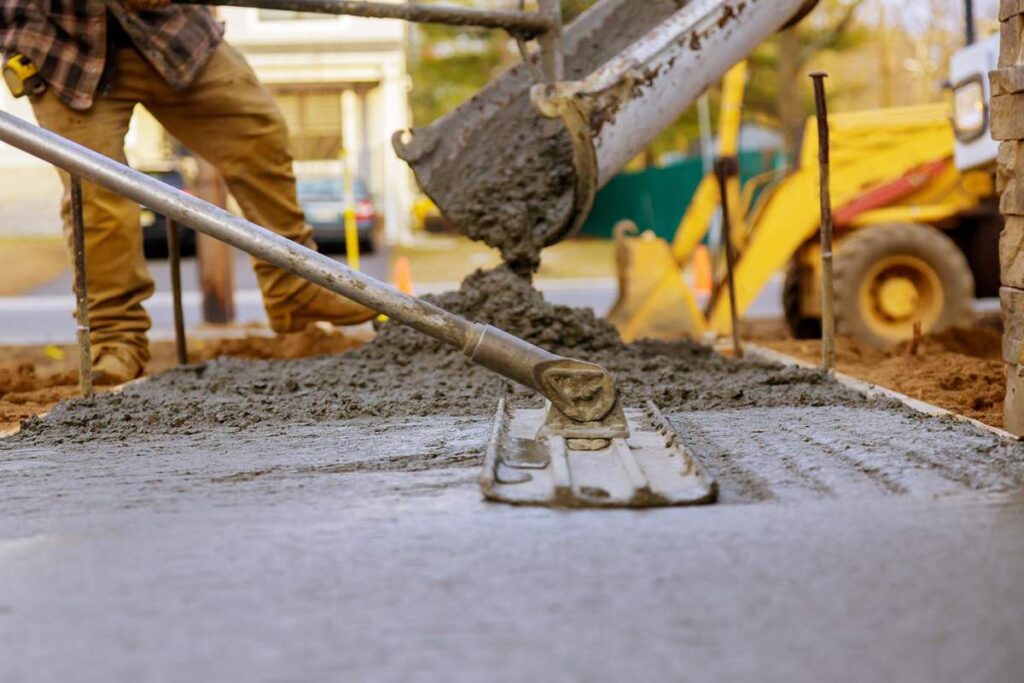
Concrete is durable and useful for foundations, slabs, retaining structures, and other demanding applications, but its production can have a substantial carbon footprint. Lower-carbon mixes, appropriate use of supplementary cementitious materials, and accurate quantity calculations can reduce unnecessary impact.
Avoiding overbuilding is also a sustainability measure. A properly designed foundation that uses materials efficiently may be preferable to excessive concrete that adds cost and embodied emissions without improving performance.
Durable exterior materials
Exterior materials should resist moisture, ultraviolet exposure, impact, and freeze-thaw movement. Fiber-cement siding, metal roofing, properly detailed wood siding, and other durable systems may perform well when selected for the specific application.
The environmental advantage comes from service life and maintainability, not simply from the material name. A product that lasts longer but cannot be repaired may not be the best choice if a repairable alternative is available.
How do sustainable materials affect indoor air quality?
Some building products release chemicals into indoor air after installation. Choosing low-emitting paints, adhesives, sealants, flooring, cabinets, and composite wood products can help reduce indoor pollutants.
Ventilation is equally important. A tightly sealed building needs planned air exchange to control humidity and maintain healthy indoor conditions. In a cold climate, excess indoor moisture can condense inside wall or roof assemblies, contributing to mold, decay, or insulation problems.
A sustainable project therefore balances air sealing with controlled ventilation. Materials that are environmentally preferable but installed in a damp or poorly ventilated assembly may not perform sustainably over time.
Is local sourcing always more sustainable?
Not necessarily. Transportation is only one part of a material’s total environmental impact. A locally available product that wears out quickly may have a larger life-cycle impact than a longer-lasting product transported from farther away.
Local sourcing can still provide practical benefits, including shorter delivery distances, easier access to replacement materials, familiarity with regional construction practices, and support for repair rather than full replacement. The better question is whether the material is durable, appropriate, maintainable, and reasonably sourced.
What should homeowners ask before choosing materials?
Before selecting a product, consider the building’s exposure and expected use. Questions worth asking include:
- How will the material handle snow, ice, moisture, and freezing temperatures?
- What maintenance will be required every few years?
- Can damaged sections be repaired without replacing the entire system?
- Are installation details available for cold and wet conditions?
- Does the product have credible information about recycled content, emissions, or life-cycle impacts?
- Is the material compatible with existing walls, roofs, foundations, and finishes?
- Can it be reused or responsibly disposed of later?
Environmental product declarations and manufacturer documentation can provide useful information, but they should not replace practical evaluation. A material with a favorable environmental profile still needs to be correctly sized, detailed, installed, and maintained.
For households in the community, sustainable construction often means choosing materials that conserve energy, resist local weather, minimize waste, support healthy indoor conditions, and remain useful for many years. The strongest results usually come from combining durable materials with careful moisture management, efficient design, and maintenance that prevents small problems from becoming major replacements.